
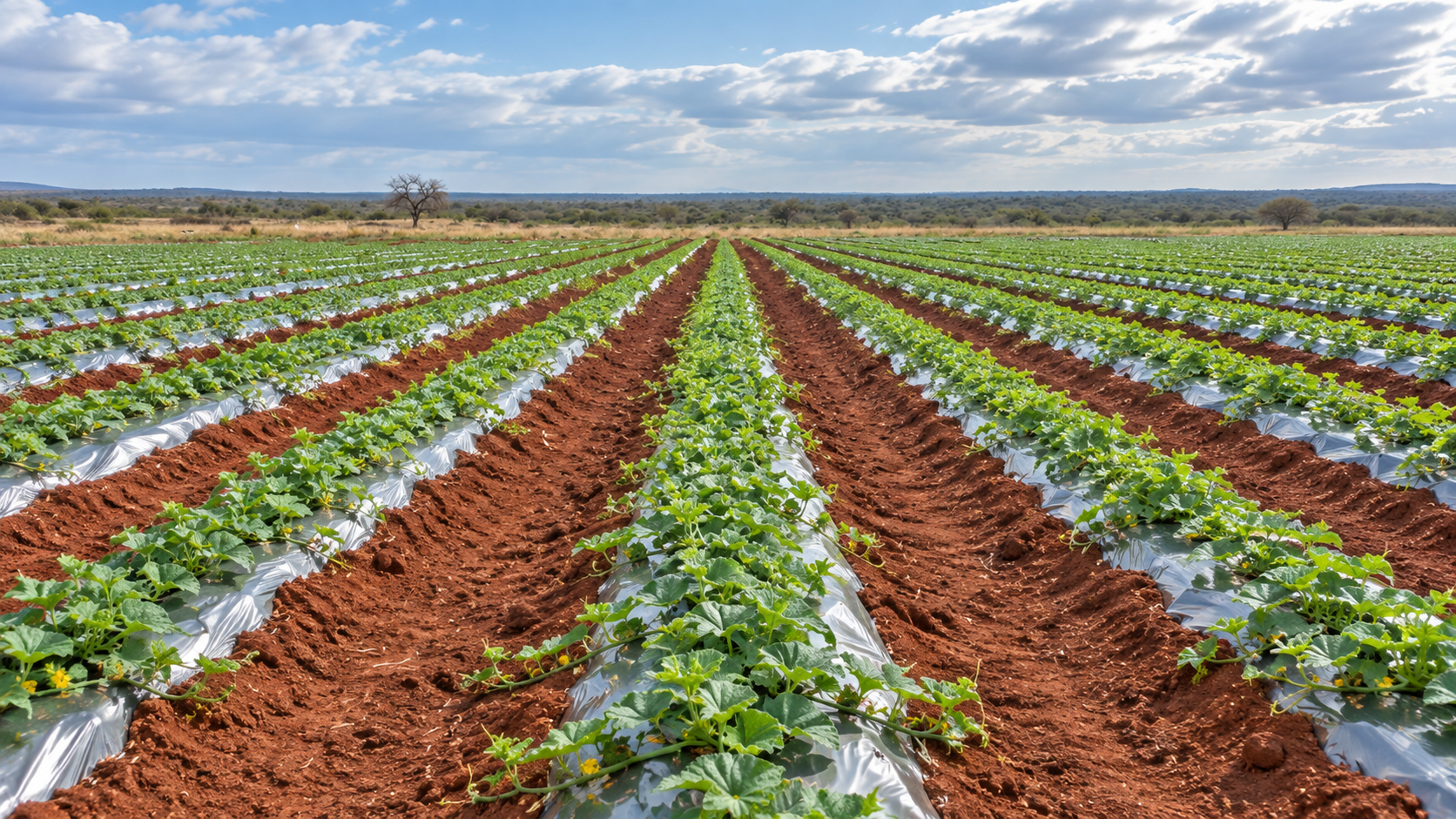
How Plastic Mulch Helps South African Farmers Save Water During Drought and El Niño
Practical guidance for protecting soil moisture, reducing weed competition and improving irrigation efficiency in dry growing conditions.
Updated 23 September 2026 by Polywrap
2026 El Niño: plan early, but use local advice
The World Meteorological Organization reported on 3 September 2026 that El Niño was firmly established and expected to strengthen, with an exceptionally high likelihood of persisting into early 2027. A strong El Niño can shift rainfall and temperature patterns and increase the risk of drought, extreme heat or flooding.
That does not mean every South African farming area will experience the same conditions. Province, rainfall region, soil, crop, planting date and other climate drivers all matter. Use current South African Weather Service information and advice from your irrigation specialist or agronomist when making farm-specific decisions. Read the September 2026 WMO update.
During water restrictions, high temperatures, dry spells or unpredictable rainfall, every litre applied to a crop must be managed carefully. Correctly selected and installed plastic mulch can limit evaporation from the covered soil surface, reduce competition from weeds and support more consistent water delivery around the crop root zone.
Plastic mulch is not a cure for drought and does not replace sound irrigation design. It works best as one part of a wider water-management plan that includes properly maintained driplines, soil-moisture monitoring, suitable planting dates, weed control and irrigation scheduling.
Why plastic mulch can help in dry conditions
Reduces evaporation from covered soil
By shielding the soil surface from direct sun and wind, plastic mulch can slow moisture loss from the covered bed. The result depends on crop cover, soil type, wind, temperature, irrigation method, mulch colour and installation quality. Polywrap does not publish one universal water-saving percentage because responsible recommendations require field-specific evidence.
Reduces weed competition
Opaque mulch limits the light available to many weeds beneath the film. Fewer weeds can mean less competition for water and nutrients. Weeds can still grow through planting holes, damaged areas and uncovered edges, so field inspection remains necessary.
Supports controlled drip irrigation
A dripline installed under the film delivers water closer to the root zone and protects the wetted soil from direct surface evaporation. Test the system before covering it and continue checking pressure, filters, leaks and emitter performance during the crop cycle.
Helps manage root-zone temperature
Mulch colour affects heat absorption and reflection. Black mulch generally absorbs more solar energy. Black-grey and white-black films have more reflective upper surfaces and may be better suited to hotter sites or seasons. The correct choice depends on the crop, region, soil and planting window.
Protects the covered bed surface
Mulch can reduce direct wind exposure, raindrop impact, surface sealing and soil disturbance on the covered area. Because rainfall cannot pass through the plastic itself, beds must be shaped and drained correctly, and water must enter through drip irrigation, planting holes or uncovered areas.
Which Polygrow mulch should you consider?
| Film | Typical thicknesses | Best considered for | Important note |
|---|---|---|---|
| Black mulch | 20, 25 and 30 micron | Strong light exclusion, weed suppression and situations where warmer soil may be useful | Black film can increase heat absorption; check crop and seasonal suitability |
| Black-grey mulch | 30 and 40 micron | Weed suppression with a more reflective upper surface than standard black film | Often considered for warmer conditions, subject to crop and site requirements |
| White-black reflective mulch | 60 micron | Hotter conditions, longer crop cycles and demanding applications requiring a strong reflective surface | White side faces upward; black underside blocks light |
Thickness and lifespan: 20 and 25 micron films are generally considered for shorter crop cycles, normally up to six months, depending on field conditions and installation. Films of 30 micron and above can be specified for longer requirements; selected formulations may be suitable for up to 12 months. UV exposure, chemicals, wind, soil preparation, installation tension and handling all affect service life. Confirm the required duration with Polywrap before ordering—thickness alone is not a lifespan guarantee.
Polygrow mulch can be supplied punched or unpunched. Standard punched options may include 80 mm planting holes. Film width, hole size, hole spacing, roll length and thickness must match the crop, bed profile, planting equipment and required duration.
Crop and field guidance
| Situation | What to evaluate | Likely starting point |
|---|---|---|
| Short-cycle vegetables | Planting density, weed pressure, bed width and seasonal heat | Black 20–30 micron, subject to crop duration and temperature |
| Hot production areas | Risk of excessive root-zone heat and reflected light around young plants | Black-grey or white-black reflective mulch |
| Longer crop cycles | Required field life, wind exposure, chemical programme and removal method | 30 micron or higher after confirming the full specification |
| Raised beds with drip irrigation | Bed profile, dripline position, emitter spacing and planting-hole layout | Punched or unpunched film matched to the planting system |
These are starting points, not crop prescriptions. Trial the selected film on a manageable area where local experience is limited, and compare soil moisture, crop response, weed pressure and film condition.
10 actions to take before dry conditions intensify
- Inspect the water source and irrigation capacity. Know the available volume, delivery rate and any restrictions before planting.
- Service pumps, filters and pressure regulators. A blocked filter or incorrect pressure undermines even a well-designed drip system.
- Install and test driplines before laying mulch. Check every zone for leaks, blockages and uneven delivery.
- Match emitter spacing to the crop and soil. Sandy and heavier soils spread water differently; verify the wetting pattern.
- Prepare a smooth, weed-free bed. Stones, stalks and sharp clods can puncture the film and create wind-lift points.
- Select colour and thickness for the site. Do not choose on price alone; heat, duration and wind exposure matter.
- Secure edges and repair damage early. Correct anchoring protects the film and prevents progressive tearing.
- Monitor moisture under the mulch. Exposed soil can look dry while the protected root zone remains wet. Use observations or sensors where practical.
- Prioritise critical crop stages. Work with an agronomist or irrigation adviser when water must be rationed.
- Plan removal and responsible disposal. Polyethylene mulch is not biodegradable and must not be burned or abandoned in the field.
Measure whether it works on your farm
To build credible farm evidence, compare a mulched and unmulched area under otherwise similar conditions. Record irrigation run time or measured water volume, soil moisture, weed-control labour and chemical use, crop losses, marketable yield and film condition. A fair comparison is more useful than applying a generic saving percentage from another farm.
Related practical guides
- Compare plastic mulch colours for South African farming
- Understand plastic mulch thickness and lifespan
- How to specify the correct plastic mulch film
- Plastic mulch installation guide
- Plastic mulch for vegetable crops
Frequently asked questions
Does plastic mulch eliminate the need for irrigation?
No. It can help reduce moisture loss from covered soil, but the crop still needs a correctly designed and managed irrigation programme.
Will plastic mulch prevent all weeds?
No. Opaque film can suppress many weeds beneath it, but weeds may still emerge through planting holes, tears and uncovered edges.
Which mulch is best for very hot areas?
Black-grey or white-black reflective mulch may be more appropriate than standard black film where excessive heat absorption is a concern. The crop, season, soil, location and irrigation programme must still be considered.
Can rainwater pass through plastic mulch?
No. Water enters through planting holes, uncovered areas and the sides of the bed. Drip irrigation beneath the film provides more controlled delivery.
How long will plastic mulch last?
There is no responsible answer based on thickness alone. Film formulation, micron, UV exposure, wind, chemical contact, field preparation, installation and handling all affect life. Explain the intended crop duration and conditions when requesting a specification.
Ask Polywrap for a farm-specific recommendation
For a useful recommendation and quotation, provide your crop, production area, bed width, planting spacing, required film width, punched or unpunched preference, expected crop duration, irrigation system, growing region and delivery destination.
Do not wait for drought pressure to expose a weak irrigation or mulch specification. Plan and test the complete system before planting.